Indra Jatra 2026 – A Visitor Guide for Kathmandu’s biggest festival.
A local’s insight and guide inside Kathmandu’s largest eight-day street festival
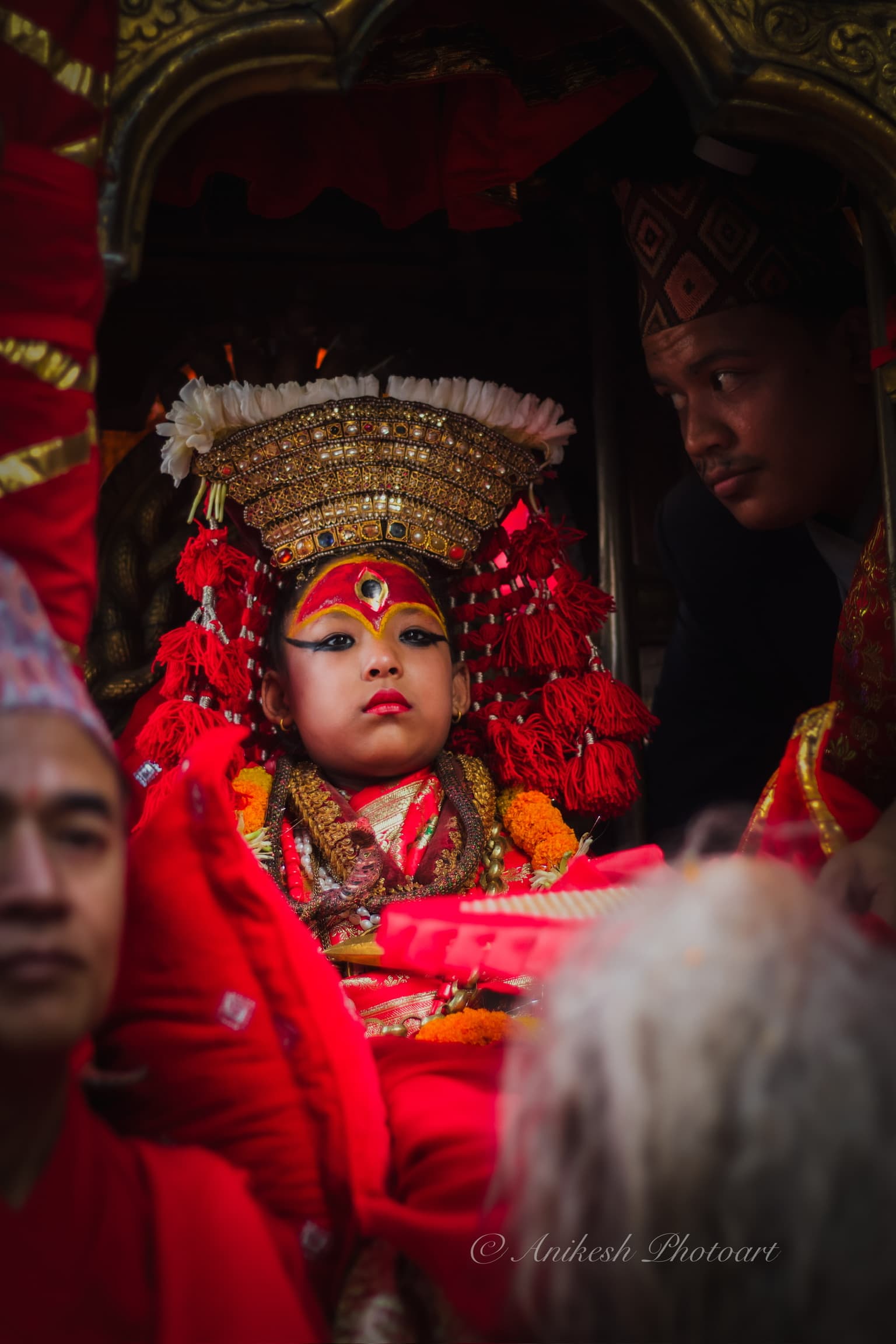
For eight days around September, the god of rain is put on trial, a living goddess leaves her window and rides through the old city, and a red-faced demon dances through the streets to protect the children who live there. This is Yenyā Punhi, also known as Indra Jatra, and it is the single biggest street festival on Kathmandu's calendar.
If you happen to be in the city while it runs, you are watching something far older and stranger than a parade.
What Indra Jatra Celebrates
As diverse as the city itself, Yenyā has many tales of origins. The one most locals tell begins with Lord Indra, king of heaven and god of rain. He came down to Earth in search of parijat, the night-blooming jasmine his mother needed. Disguised as a human, he picked it, and the locals arrested and paraded him through the streets, hands bound, not realising who he was.
The jatra reenacts that story from beginning to end: Indra’s search, his capture, his elephant Pulu Kisi searching for his master, to finally reuniting with his mother Vasundhara, before being released back to heaven.
Folded into the jatra much later, three chariot processions are now the centrepiece. Ganesh, the smallest chariot, leads and clears the path, as he does before any Hindu ritual. Kumari, the living goddess, follows, introduced during the Malla dynasty. Bhairav, the fierce protector, third, who pauses for extended rituals along the route.
Faces of the Festival:
While there are many figures that make the festival, here are a few worth knowing:
Kumari, the Living Goddess
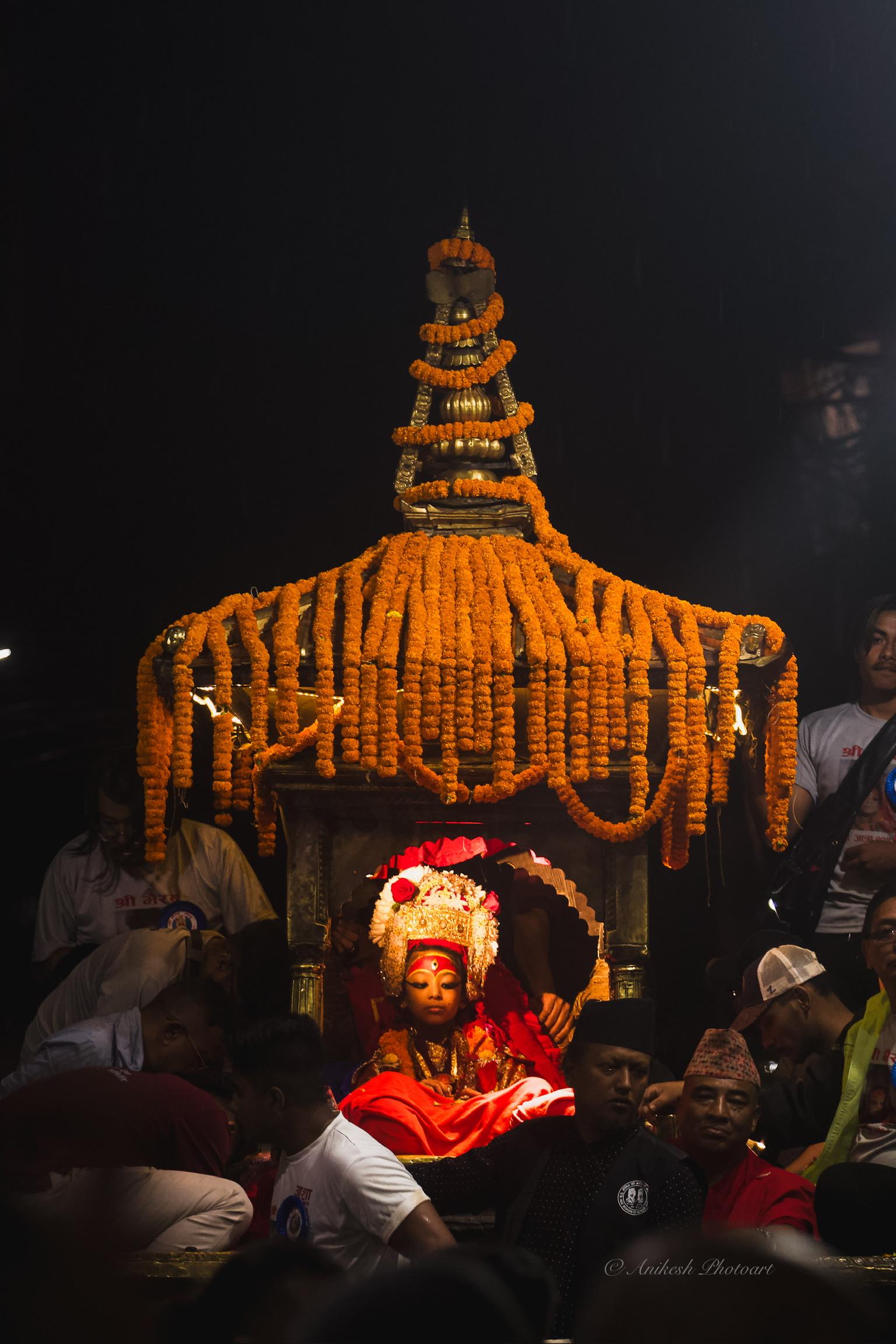
A pre-pubescent girl from the Shakya Newar Buddhist community, selected as the living vessel of the goddess Taleju Bhawani. Regarded as a protector, for most of the year she only appears in her the window at the Kumari Ghar.
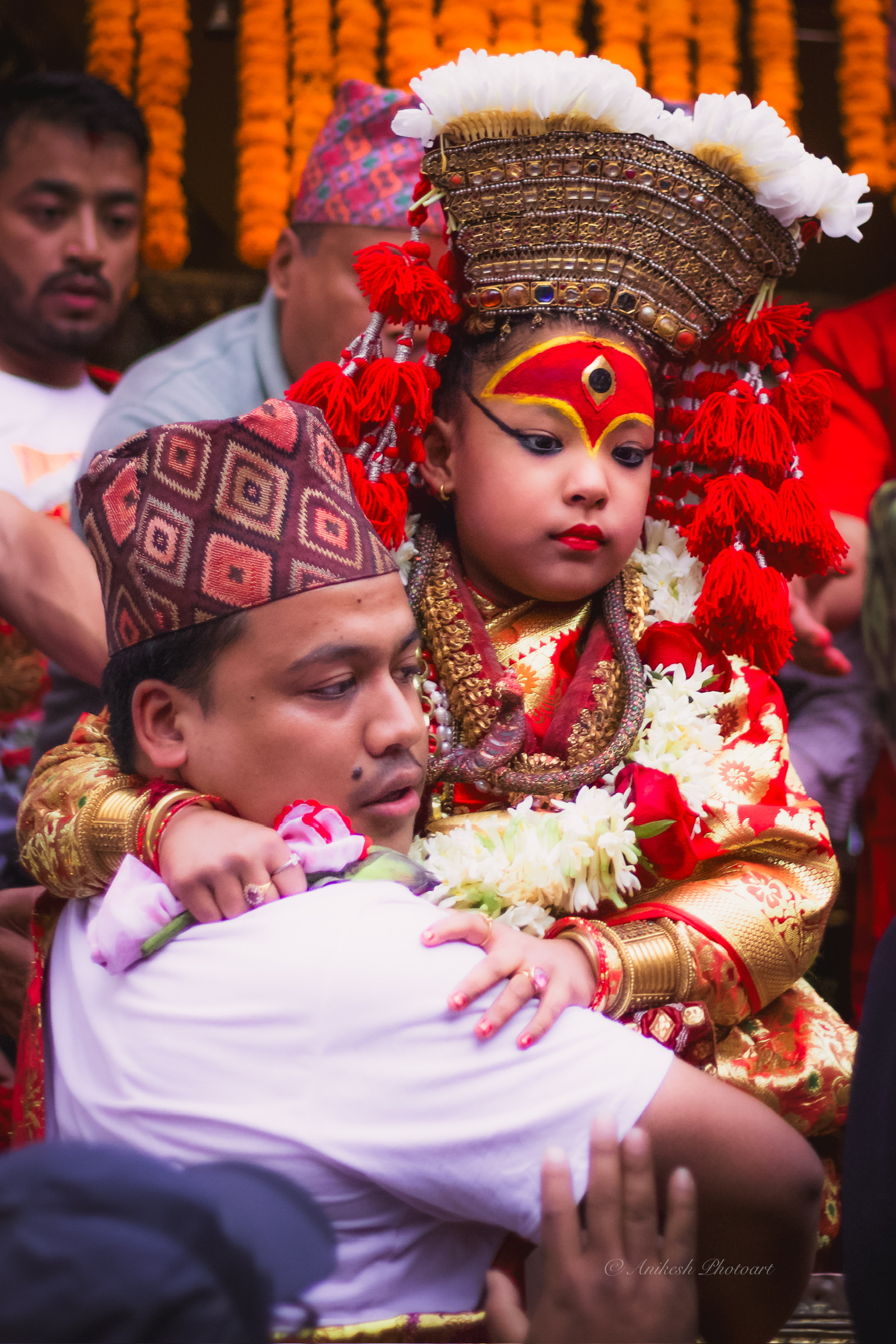
During Indra Jatra she rides her chariot through the old city for three days: Kwaneyā, Thaneyā, and Nānichā. This year's watch is particularly exceptional, as it marks her first public appearance since her selection.
Swet Bhairav, The Wrathful Manifestation of Shiva
Kept behind a wooden lattice for 357 days of the year, Indra Jatra is the exception. He appears in public with a copper pipe in his mouth, dispensing aylā (rice liquor), as prasād, which devotees drink as a blessing.
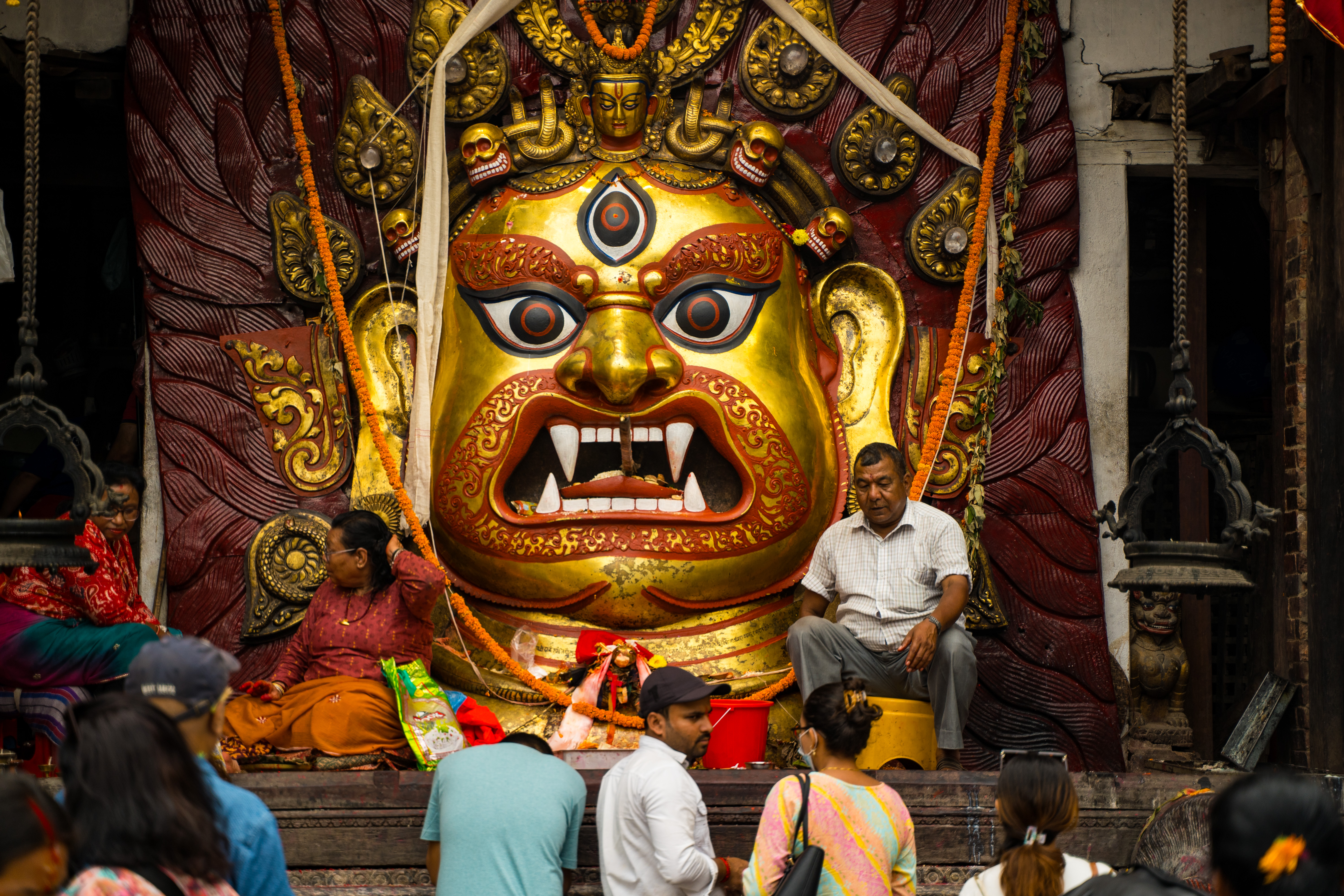
Despite his ferocious look he is said to protect the city from evil forces.
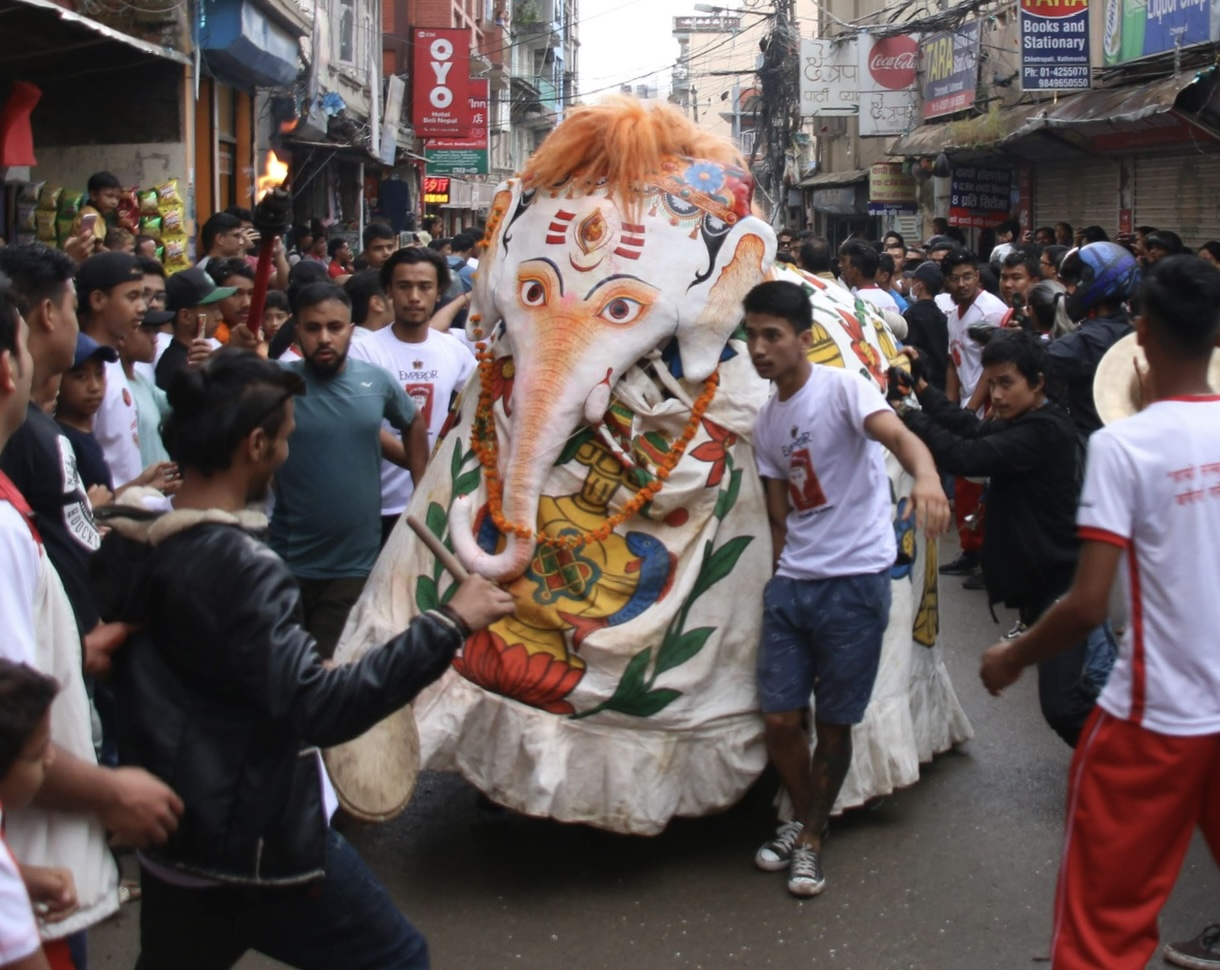
Pulu Kisi, Indra’s White Elephant
In Hindu mythology, Pulu Kisi is Indra’s vehicle, searching the streets of Kathmandu his master. Handlers move the figure through the crowd. The trunk swings toward onlookers, stumbling and recovering, reenacting the moment of crisis just before the myth resolves.
Majipa Lakhey
In Newari folklore the Lakheys are flesh-eating demons. In Kathmandu’s Indra Jatra, however, Majipa Lakhey fell in love with a woman and agreed to guard the city’s children in return for her acceptance. He dances through the streets, driving away the malevolent spirits he was once counted among.
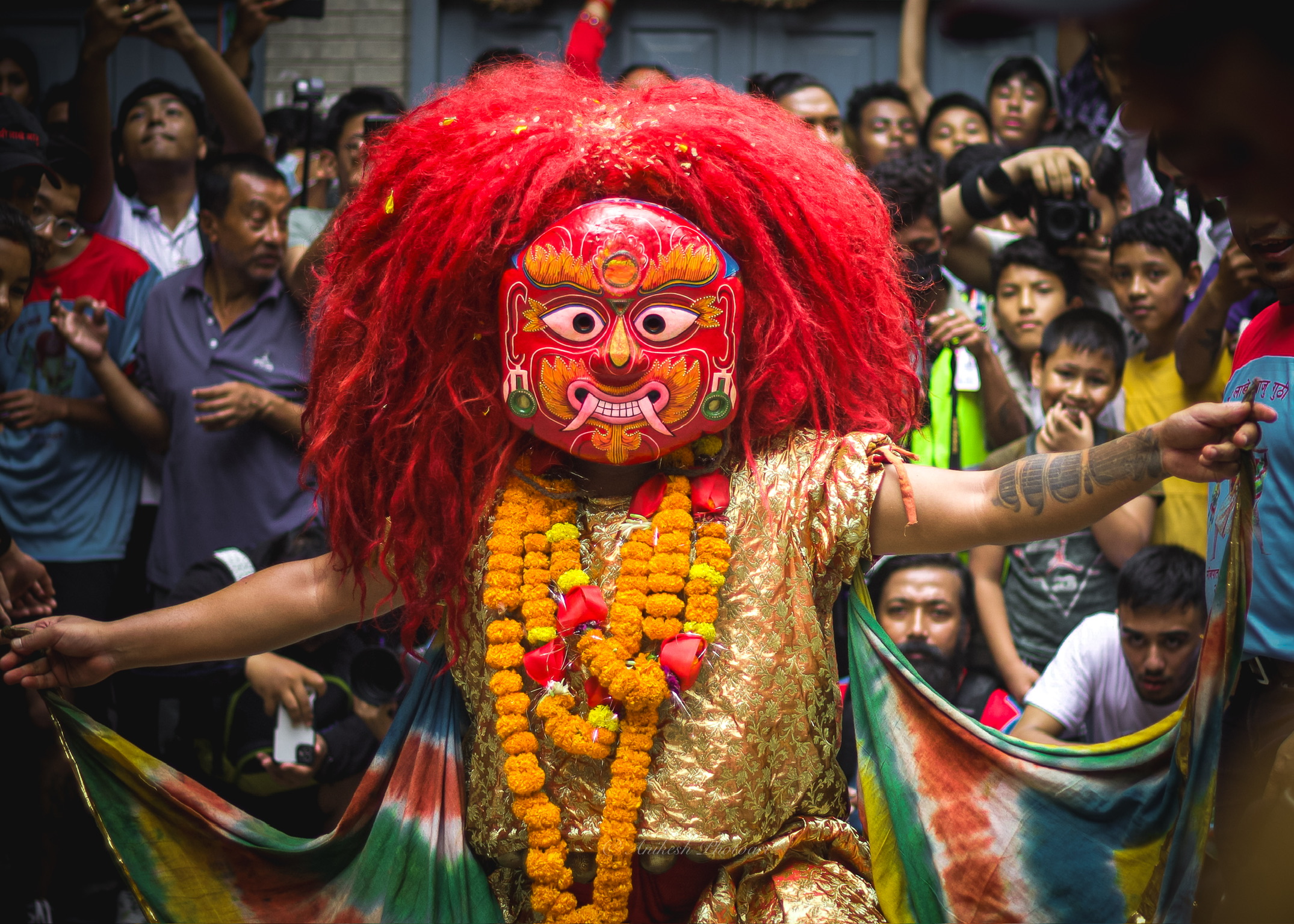
During the loud days, you will also see Sawabhagu, the only masked dancer with a sword, and his two children. When the chariots retreat to Hanuman Dhoka, Devi Pyakhan and Bhairav Pyakhan take over, dancing in a state of trance in the old courtyards. Devotees believe the performers become vessels for the deities.
After Dark
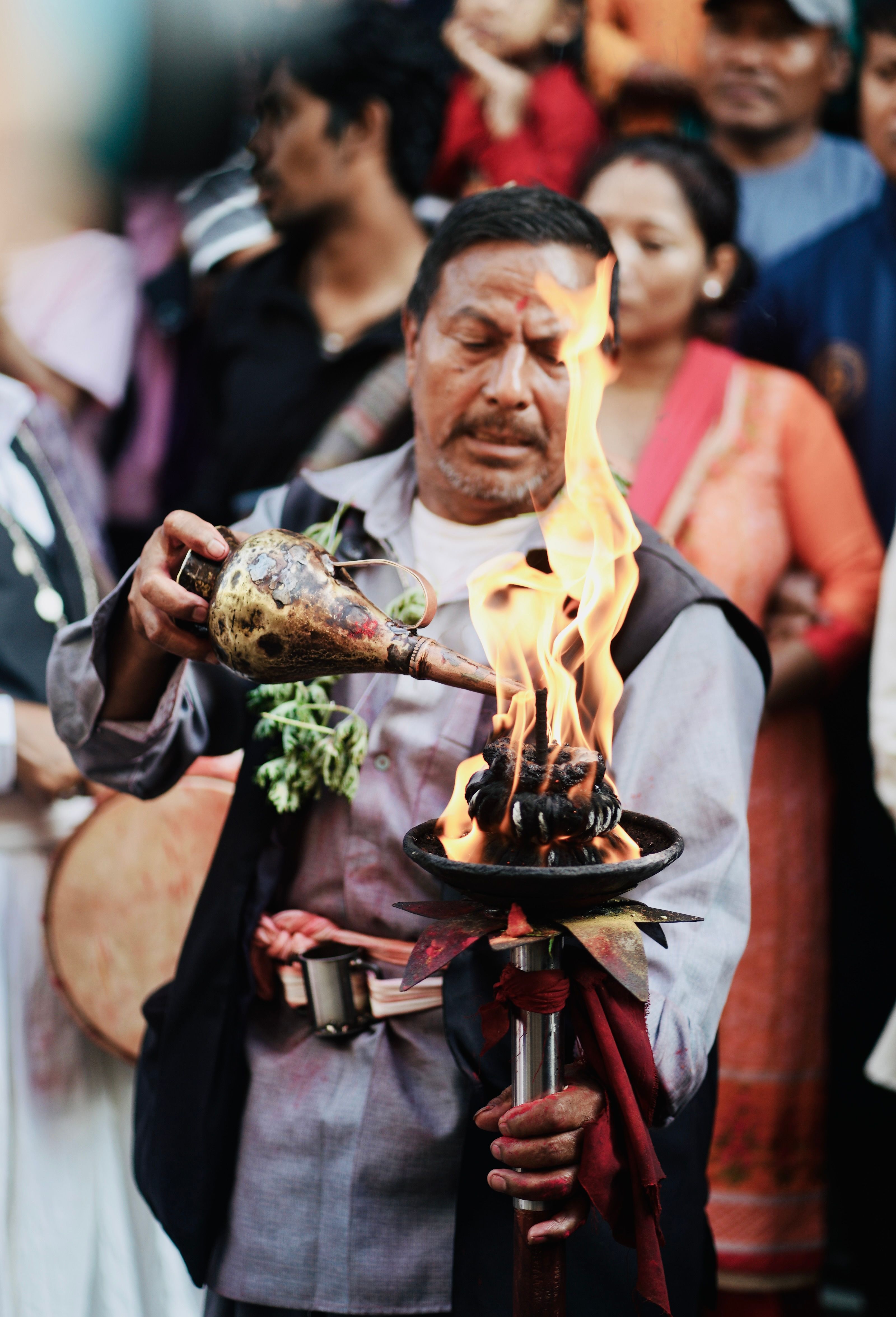
Behind the crowds and celebrations, Upāku serves as a quiet memorial for people who have passed in the preceding year. Bereaved families carry oil lamps for the departed, guiding them to their next destination.
A Little Note on History
Indra Jatra also marks a turning point in Nepal’s history. During the 1786 jatra, Prithivi Narayan Shah’s forces attacked Kathmandu and later annexed it. Some of what you see still carries that memory. The lights set in a wheel-like structure and carried through the streets are said to reenact a promise from the people of Hyumata to King Jayaprakash Malla, who had fled to Patan: they would keep the light moving until it was safe for him to return.
Eight Days, Three Chariots
Yenyā runs for eight days, built around three chariot processions, masked dances, and a string of smaller rituals.
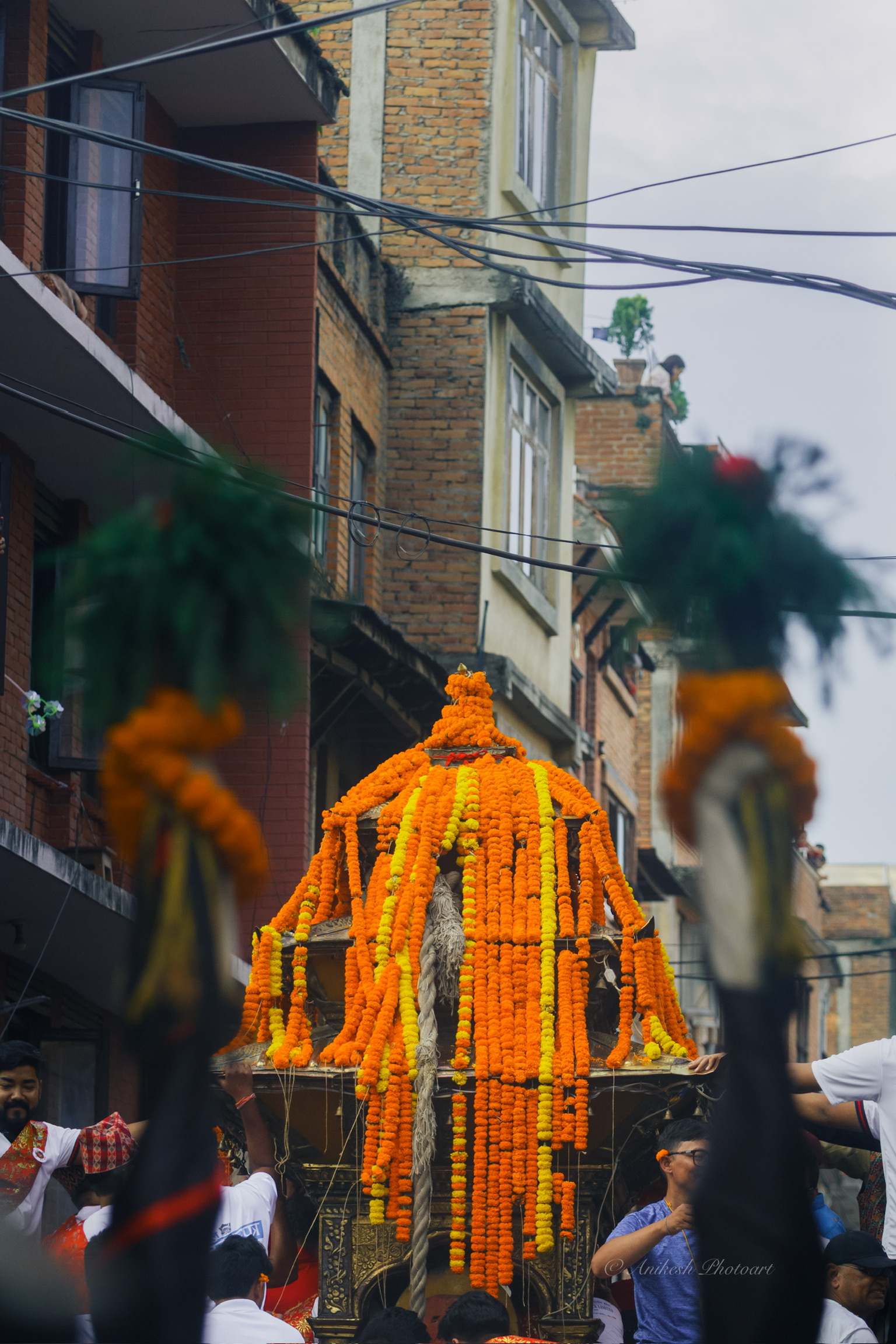
- Day 1. The Yosin pole is raised at Hanuman Dhoka. Kwaneyā, the first chariot pull, follows in the afternoon. It is the busiest day.
- Day 2. Thaneyā, the second chariot pull, goes through the northern bazaar.
- Late in the week. Nānichā, the third and shortest pull.
- Final day. The Yosin pole is lowered, and Indra is released back to the heavens.
As the chariots are pulled across old Kathmandu here is a guide of the route:
| Day | Distance | Duration | Route | Note |
|---|---|---|---|---|
| Kwaneyā | 2.2 km | 4–6 hours | Maru, Chikanmugal, Jaisidewal, Lagan, Kohiti, Bhimsensthan | The longest pull. Some alleys barely fit the chariots. |
| Thaneyā | 1.8 km | 3–5 hours | Makhan, Indra Chowk, Asan, Kel Tole | The most crowded. |
| Nānichā | 1.2 km | 2–3 hours | Kilagal, Maru | The shortest, often watched from windows above. |
Between the Processions
On the days without chariots, masked dances, Bhairav displays, and memorial processions continue each evening. The city does not go quiet. It changes register.
Experiencing Yenyā as a Traveller
Indra Jatra follows the lunar calendar, so the dates shift each year. In 2026 the main Kumari procession falls on Friday 25 September, and the festival runs through 2 October.
You do not strictly need a guide. The chariots pass through public squares, and anyone can stand in the crowd at Basantapur or along the road to Hanuman Dhoka. What is easy to miss alone is everything around the procession: why Akash Bhairav appears on only one day, the bahals a few steps off the main lanes, and why the Lakhey moves the way he does. Kathmandu shows you its surface freely. The context takes a guide, or years of living here.
Practical Notes
- Mindful. This is a living ritual, not a performance. Move through the processions, with that in mind, and photograph with discretion, particularly around grieving families.
- The crowd. It get dense and physical, keep valuables secure. It is part of the experience, not a flaw in it.
- Dress. Dress modestly, wear comfortable shoes and carry something waterproof as it's the tail end of monsoon. Don't let the light shower put you off, Basantapur has a charm of its own then.
- Where to stand. Arrive early at Basantapur and Hanuman Dhoka. The lanes fill hours before the chariots move. Pick one viewing place, café, a step, a corner, and keep it.
What to Eat
Food turns up all day. Look for samay baji, the Newari ceremonial plate of beaten rice, spiced potato, black soybeans, grilled meat, and aylā. Each item carries its own meaning, and the plate is served with particular pride during Indra Jatra.
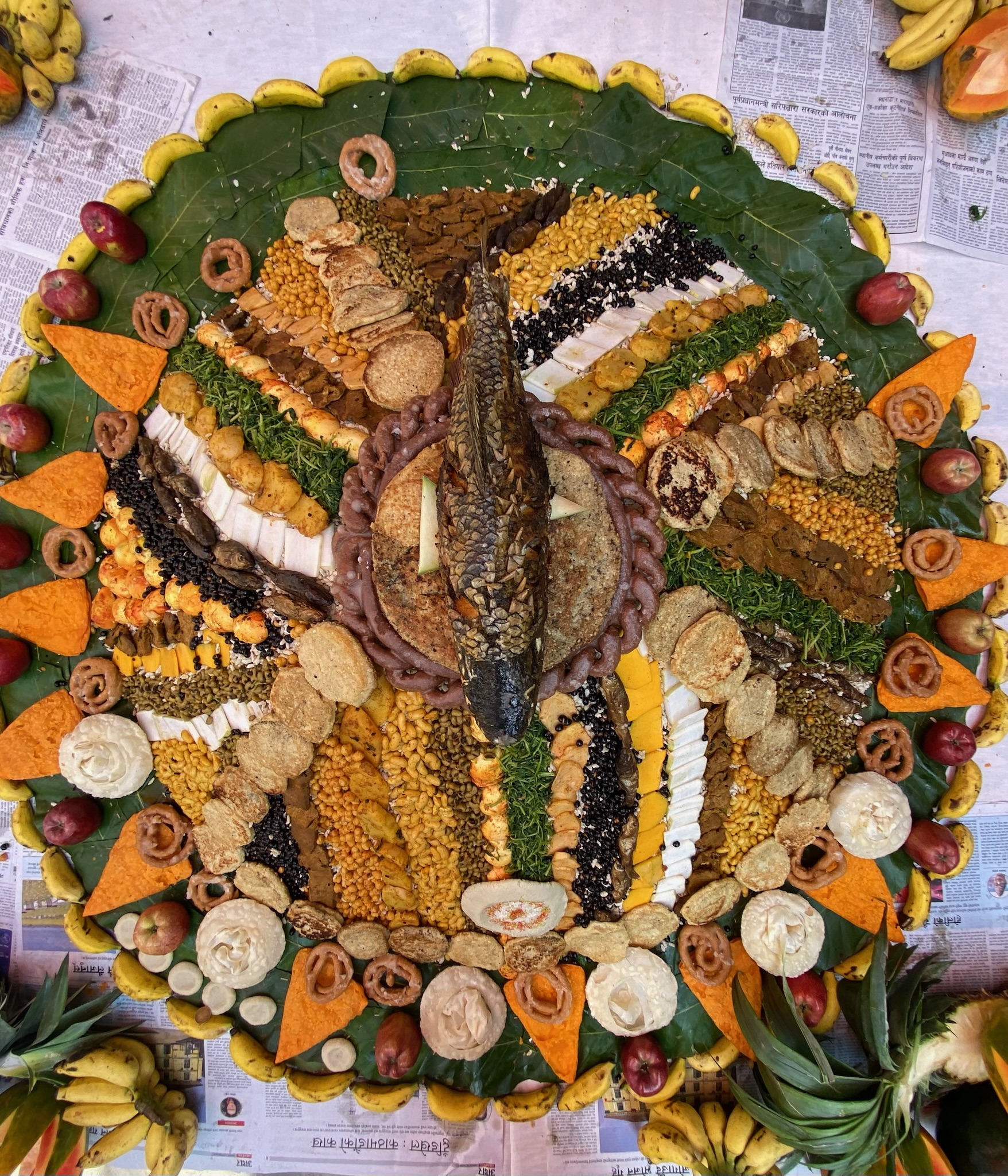
What stays with you is rarely the chariots alone, striking as they are. It is the strangeness of one day holding a living goddess, a demon who protects children, a searching elephant, and families walking in grief, all on the same few streets.
At Rural Heritage Journeys, that is what we try to put into a day: not only the chariot passing, but why it is there, and the people who have kept it moving.
Related Journeys
Related blogs
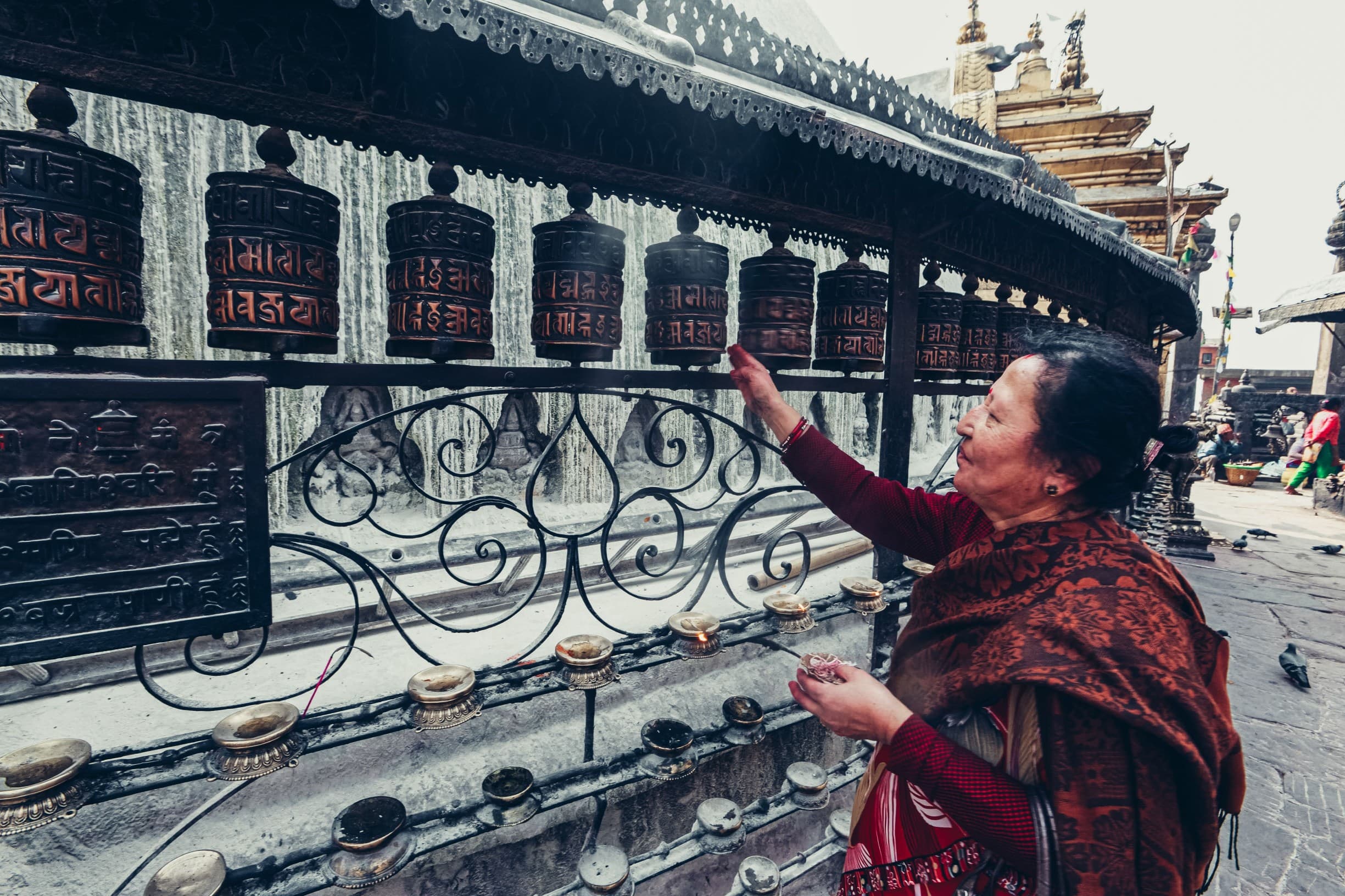
Gunla Festival: A Month of Living Buddhist Tradition in Kathmandu Valley
Discover Gunla Festival in Nepal, a month-long Newar Buddhist tradition featuring early-morning processions, Gunla Bajan, sacred rituals and ancient heritage.
Aug 14, 2026
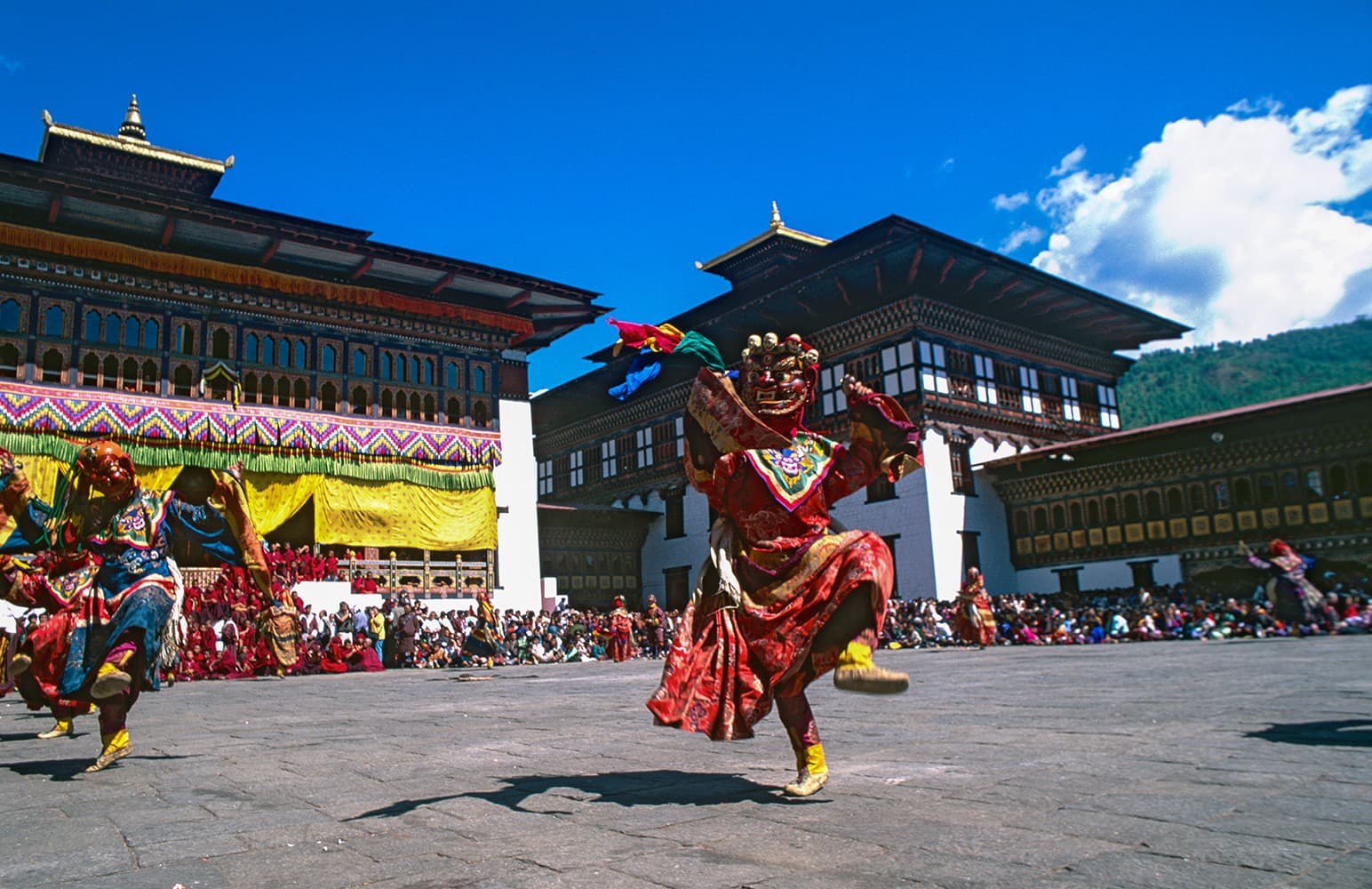
Bhutan Festival Guide
Discover Bhutan's most spectacular Tsechus and cultural festivals, from grand monastery celebrations to intimate local traditions, with insights into when and where to experience them.
Jul 23, 2026